
Strategic management isn’t rocket science. But it’s the difference between businesses that thrive and those that barely survive.
Only 7% of business leaders believe their organizations are excellent at strategy implementation. But 82% of these failures happen because of poor cash flow management. That’s not bad luck. That’s bad planning.
Want to know what’s even more shocking? Research shows that 80-90% of business strategies fail during execution. Not because the plan was bad. But because companies treat strategy like a yearly homework assignment instead of a daily practice.
Think about it. You spend weeks creating a perfect strategic plan. Then it sits in a drawer collecting dust. Your team doesn’t know what you’re working toward. Market conditions change. Competitors move faster. And suddenly, your brilliant strategy is worthless.
But the good news is it doesn’t have to be this way.
The companies winning today aren’t lucky. They’re disciplined. They don’t just plan a strategy, they live it every single day. And in this guide, you’ll discover exactly how they do it.
What Is Strategic Management and Why Should You Care?
Strategic management is the continuous process of planning, monitoring, and adjusting your business strategy to meet your goals. It’s not a one-time plan; it’s an ongoing system that keeps your business competitive and profitable.
Most business owners confuse strategic planning with strategic management. That’s a costly mistake.
Strategic planning happens once or twice a year. You set goals, write them down, and create a plan. Strategic management happens every day. You execute that plan, track results, and make changes when needed.
Here’s a simple way to understand it: Strategic planning is like creating a map for a road trip. Strategic management is actually driving the car, watching for roadblocks, and taking detours when needed. The map is useless if you never start driving.
Companies that practice strong strategic management and follow proven business management tips don’t wait for annual reviews. They monitor their business constantly. They spot problems early. They adapt fast. And they win.
Strategy vs. Planning vs. Management: Know the Difference
These three terms sound similar, but they’re completely different. Understanding this difference is crucial for your success.
| Term | Focus | Time Horizon | Key Output |
| Strategic Planning | Defining direction and setting goals | Periodic (Annual/Quarterly) | A formal, written Strategic Plan |
| Strategic Management | Execution, monitoring, and adapting the plan | Continuous / Ongoing | A resilient, adaptive organization |
| Strategy | The “Why” and “What” (Core approach) | Long-term (3-5+ Years) | Competitive Advantage & Unique Value |
Strategy is your long-term approach. It’s your “why” and “what.” It answers questions like: What makes us different? What value do we offer? Strategy typically spans 3-5 years.
Strategic Planning is when you sit down and create that strategy. You define your direction and set specific goals. This happens periodically—usually once or twice a year. The output is a formal written document.
Strategic Management is the execution phase. It’s continuous. It’s monitoring your progress, tracking results, and making adjustments daily or weekly. The output is a resilient, adaptive organization.
Think of climbing Mount Everest. Your strategy is to decide to climb the mountain. Planning is mapping the route and preparing equipment. Management is the actual climb—navigating storms, adjusting your path, and keeping your team motivated until you reach the summit.
How the Strategic Management Process Works
The strategic management process has five essential steps: Goal Setting, Analysis, Strategy Formation, Implementation, and Evaluation. These steps form a continuous cycle, not a one-time event.
Understanding this process of strategic management helps you avoid the biggest mistake most businesses make: treating strategy as a linear path. It’s not. It’s a loop.
The 5 Steps That Drive Success
Let’s break down each step so you can apply it immediately.
| Process Step | Activity | Key Output |
| 1. Goal Setting | Clarifying vision, mission, and objectives. Defining what success looks like. | Clear targets (e.g., “Increase market share by 15%,” “Become industry leader in sustainability”). |
| 2. Analysis | Scanning internal (strengths/weaknesses) and external (trends) environments. Understanding the competitive landscape. | SWOT & PESTLE Analysis reports. Market position assessment. |
| 3. Strategy Formulation | Choosing the path to achieve goals (Cost Leadership vs. Differentiation). Allocating resources strategically. | A defined roadmap and resource allocation plan. Clear competitive positioning. |
| 4. Implementation | Assigning roles, setting timelines, and executing tasks. Translating strategy into daily work. | Actionable workflows and project launches. OKRs cascaded throughout the organization. |
| 5. Evaluation | Monitoring KPIs and adjusting course. Reviewing what’s working and what isn’t. | Performance reports and corrective actions. Insights for next strategic cycle. |
Step 1: Goal Setting is where you clarify your vision and mission.
You define what success looks like. For example: “Increase market share by 15%” or “Become the industry leader in customer service.” Clear targets give your team direction.
Step 2: Analysis means scanning your internal strengths and weaknesses, plus external market trends.
You’re understanding where you stand compared to competitors. Tools like SWOT analysis help here. You’re asking: What are we good at? What’s changing in our market?
Step 3: Strategy Formation is choosing your path forward.
Will you compete on price or quality? How will you allocate resources? This step creates your roadmap and defines your competitive position.
Step 4: Implementation translates strategy into daily work.
You assign roles, set timelines, and launch projects. To close this gap, teams often rely on digital execution frameworks to ensure every milestone is assigned and tracked in real-time.
Step 5: Evaluation tracks your progress using key metrics.
You monitor what’s working and what isn’t. Then you cycle back to Step 1, refine your goals, and adjust your strategy.
This cycle never stops. After evaluation, you don’t celebrate and forget about the strategy. You loop back, analyze new data, and keep improving.
Choosing Your Model: Linear vs. Always-On Strategy
If you want to connect vision to execution without losing either along the way, the Integrated Strategic Management model offers a clear path. It’s an 8-step process that keeps long-term goals and day-to-day work tied together.
Here’s how it works:
- Define your overall strategy.
- Clarify what each functional area is responsible for.
- Build the organizational structure that supports it.
- Optimize how each function operates, whether that’s HSE, operations, or another area.
- Map out what resources you’ll need.
- Combine everything into a 5-year integrated schedule.
- Put the long-term plan into action.
- Track performance regularly to keep things on course.
The key is that none of these steps happen in isolation. They feed into each other, which is what keeps the strategy from drifting away from reality.
Why Strategic Management Matters for Your Business
Strategic management transforms reactive businesses into proactive leaders. By applying proven strategic tips for alignment, you ensure that every department, from marketing to operations, is working toward the same ‘North Star’ and stops wasting resources on conflicting priorities.
Let me show you exactly how this happens.
- Proactive Direction means you stop putting out fires and start preventing them.
Instead of reacting to market changes, you influence them. Amazon saw that retail companies weren’t investing in cloud technology. They moved first, launched AWS, and created an entirely new market. That’s a proactive strategy.
- Operational Efficiency happens when all departments work toward the same “North Star.” Marketing, sales, product, and operations stop duplicating work.
Resources aren’t wasted on conflicting priorities. This simple alignment freed up massive resources for high-impact work. - Long-Term Resilience comes from spotting threats early. Continuous analysis lets you pivot before a crisis hits.
During COVID-19, companies with scenario plans adapted four times faster than competitors. Why? They already had playbooks for disruption. - Enhanced Profitability results from focused resource allocation.
Research shows that organizations with mature business strategy management practices are 2.5 times more likely to succeed at their initiatives. When everyone knows the priorities, money flows to the right places.

7 Powerful Strategic Management Tips You Can Use Today
These seven business management tips address the core reasons why 70% of strategic initiatives fail: poor execution tracking, organizational misalignment, and resistance to change. Apply even one tip, and you’ll see immediate improvements.
Let’s dive into each tip with specific actions you can take this week.
Tip 1: Watch Your Market Continuously
Annual market analysis is outdated and dangerous. By the time you review Q1 trends in Q4, you’ve already lost market share. Modern businesses scan their environment monthly, not yearly.
Checking your market once a year is like checking the weather forecast once a year before a long trip. Conditions change too fast.
Use the PESTLE+I framework to stay alert.
Watch for changes in politics (new regulations, trade agreements), economics (interest rates, inflation), social trends (demographic shifts, consumer preferences), technology (AI breakthroughs, automation), legal requirements (compliance, labor laws), environmental factors (sustainability, climate impacts), and innovation (patents, startups, new competitors).
Here’s how to implement this right now.
Create a “Market Insights” repository. Any team member can tag competitor moves, news stories, or trends. Instead of insights getting lost in emails, they’re centralized and searchable. Review these insights monthly, not annually.
Netflix mastered this approach.
They continuously scanned technology trends and recognized early that streaming would disrupt traditional video rental. They didn’t wait for annual reports; they acted quarterly. By the time Blockbuster noticed the threat, Netflix had already won.
The 6 Forces Shaping Your Business Environment
To stay proactive, you need to look beyond your competitors. Use the PESTLE framework to scan for external shifts:
-
Political: New trade laws or tax changes.
-
Economic: Interest rates and consumer spending power.
-
Social: Changes in what customers value (like sustainability).
-
Technological: How AI or automation might disrupt your workflow.
-
Legal: Employment laws or data privacy regulations.
-
Environmental: Your company’s carbon footprint and climate impact.
Tip 2: Prove Your Competitive Advantage with VRIO
Most companies claim they are better without proof. VRIO analysis forces you to prove it by examining four critical factors: Value, Rarity, Imitability, and Organization.
A resource isn’t a competitive advantage unless it meets all four criteria. Here’s how it works.
Value: Does this resource add measurable value to customers? If not, it’s worthless.
Rarity: Do you own something competitors don’t have? Unique technology, exclusive data, exceptional talent, strong brand recognition, something rare.
Imitability: Can competitors easily copy it? If they can hire away your talent or replicate your process cheaply, it’s not defensible.
Organization: Is your company structured to capture value from this resource? You might have a valuable, rare skill, but if your organization can’t leverage it, you lose.
Apple’s ecosystem is a perfect example.
Their seamless integration between iPhone, Mac, and iPad adds clear value. It’s rare; no competitor has achieved this depth. It’s nearly impossible to imitate because Apple spent 20+ years and billions building it.
To find your true competitive advantage, use the VRIO framework. Ask yourself: Is your resource Valuable? Is it Rare? Is it hard to imitate? And is your Organization set up to use it? If you can’t answer yes to all four, your advantage is only temporary.
And Apple’s entire structure (hardware, software, retail) is organized to maximize this advantage. That’s why Apple maintains premium pricing and customer loyalty.
SWOT and VRIO give you a solid foundation, but successful companies typically draw from a wider set of tools to sharpen their competitive edge.
Take Porter’s Five Forces, for instance. It helps you understand the intensity of competition in your industry and assess how much leverage your suppliers actually have. The Ansoff Matrix is useful when you’re weighing whether to push harder into existing markets or branch out into new territory.
Tip 3: Prepare for Multiple Futures with Scenario Planning
You can’t predict the future, but you can prepare for multiple possible futures. Scenario planning creates contingency plans for different market conditions, reducing crisis response time by 75%.
Instead of betting everything on one prediction, one of the best strategic tips is to develop 3-4 distinct scenarios. This preparation reduces crisis response time by 75% and ensures you have a playbook ready for any market condition.
Best Case Scenario: Market booms, opportunities emerge, and all initiatives succeed.
Moderate Growth Scenario: Business as usual, steady but not explosive growth.
Downturn Scenario: Recession, supply chain problems, or competitive pressure.
Disruptive Scenario: New competitor or technology completely reshapes your industry.
For each scenario, answer these questions: What happens to our revenue? Our market share? Our profitability? Then create contingency plans for each possibility.
During COVID-19, this difference was stark. Companies with scenario plans pivoted in weeks. Those without them spent months in crisis mode, scrambling to respond. Preparation beats panic every time.
Tip 4: Align Everyone with Clear Mission, Vision, and Goals
95% of employees don’t understand their company’s strategy. Even brilliant strategies fail if your team doesn’t know what they’re working toward. Alignment starts with clear communication and measurable goals, often supported by proven business leadership insights that help bridge the gap between executive vision and frontline action.
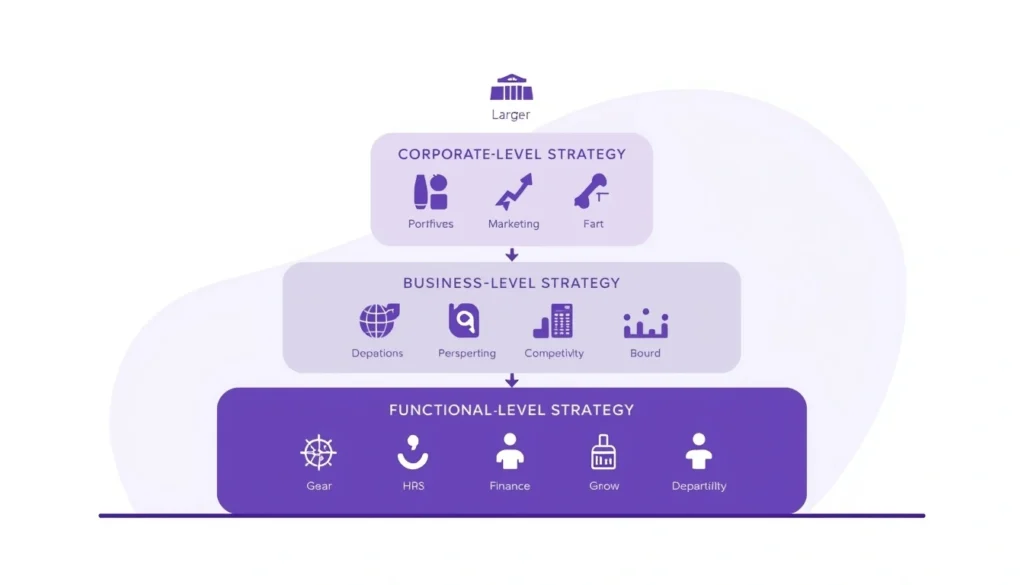
Here’s the architecture that works: Connect Vision (aspirational future) to Mission (your purpose) to OKRs (quarterly goals) to Daily Tasks (execution).
For example: Your vision might be “Become the world’s most trusted financial platform.”
Your mission is “Empower individuals to make confident financial decisions.”
Your Q1 OKR objective is “Expand to enterprise market” with key results like “Acquire 50 enterprise clients” and “Increase customer satisfaction score from 42 to 50.”
Your daily task ties directly to these: “Conduct discovery calls with 10 Fortune 500 companies.”
Notice how every level connects. An employee making discovery calls understands exactly how their work contributes to the company’s vision.
OKRs (Objectives and Key Results) are different from KPIs (Key Performance Indicators). OKRs are aspirational, quarterly, and outcome-focused. KPIs are ongoing performance metrics. Use both. OKRs answer “What ambitious outcome do we want this quarter?” KPIs answer “How are we performing on ongoing business metrics?”
Alignment requires more than good intentions. It needs structure.
Start by creating a Strategy Office or dedicated team, usually around 5 to 10 people, whose job is to shape the strategy and make sure it actually gets done. Without this, strategy work gets pushed onto people who are already stretched thin or who simply aren’t equipped for it.
Next, look at how jobs are designed. Roles need to match what your strategy demands. The Job Design Optimization Tool breaks this down into four elements: control, accountability, influence, and support. Here’s the problem most companies run into: they give someone accountability for results but don’t give them the authority to make the decisions that drive those results. When that happens, your strategy goes nowhere.
Tools like Taskfino help here by linking specific projects directly to company goals. When everyone uses the same platform, alignment becomes visible and measurable.
How to Allocate Resources Without Burning Out Your Team?
Strategic management fails when you have a million-dollar vision but a hundred-dollar budget. To avoid this, you need to align your “heavy lifters” with your “high impact” goals.
Start by auditing your team’s time. If your top goal is “Market Expansion,” but your best people are spending 80% of their day on routine maintenance, your strategy will stall. Shift your resources so that your biggest opportunities get your best talent and the most flexible part of your budget.
Tip 5: Choose Your Competitive Strategy and Stick to It
Trying to be everything to everyone kills execution. You must choose your competitive lane: cost leadership, differentiation, or niche focus, and commit completely.
Michael Porter’s research shows that companies “stuck in the middle” fail. Strategic confusion destroys execution. Here are your three options.
Cost Leadership means being the cheapest option.
Walmart, Ryanair, and Bic use this strategy. It requires ruthless efficiency and massive scale. Your advantage disappears if someone undercuts your price, so you must constantly optimize costs.
Differentiation means being unique or premium.
Apple, Starbucks, and Tesla follow this path. It requires constant innovation, strong branding, and customer loyalty. Your advantage comes from perceived value, so you must keep innovating.
Focus/Niche means targeting a specific market segment.
Ferrari focuses on luxury cars. Patagonia targets sustainable outdoor gear. You become the absolute best at serving one customer type. You can combine focus with either cost leadership or differentiation.
Why does straddling fail? Because it creates internal conflict.
Product teams want premium features (costly). Finance wants cost efficiency (cutting features). Sales promises premium service. Operations run lean. The result is mediocrity everywhere.
Tesla committed to differentiation—performance, sustainability, technology—and accepted higher prices. General Motors tried competing on both cost and premium features. Today, Tesla is worth more than all major automakers combined.
Tip 6: Track Leading Indicators with the Balanced Scorecard
Revenue and profit are lagging indicators; they tell you what has already happened. By the time revenue declines, it’s often too late. The Balanced Scorecard tracks four perspectives to predict future performance.
The Balanced Scorecard was developed by Robert Kaplan and David Norton. It monitors four interconnected areas.
Financial Perspective tracks revenue, profit margin, cash flow, and ROI. These are lagging indicators showing past results.
Customer Perspective measures Net Promoter Score, retention rate, market share, and acquisition cost. These are leading indicators predicting future revenue.
Internal Process Perspective tracks cycle time, quality metrics, efficiency, and defect rates. Better processes lead to better customer experience.
Learning and Growth Perspective monitors employee engagement, skills development, and retention. Strong teams create better processes.
These four areas connect like a chain reaction. Better-trained teams improve processes. Better processes create better customer experiences. Better customer experiences drive better financial results.
Stop Looking at the Rearview Mirror: Leading vs. Lagging Indicators
Most business owners only look at “Lagging Indicators” like monthly revenue or net profit. The problem? By the time these numbers look bad, the damage is already done.
To manage your business strategically, you must track “Leading Indicators.” These are early warning signs. For example, if your “Customer Satisfaction Score” (Leading) starts to drop today, you can bet your “Revenue” (Lagging) will drop next quarter. Tracking both allows you to fix problems before they hit your bank account.
Tip 7: Review Your Strategy Regularly
Strategy isn’t a “set and forget” document. The world changes too fast. Organizations reviewing strategy only once annually are operating blind. Establish a consistent review rhythm: weekly check-ins, monthly deep dives, and quarterly strategic reviews.
Here’s the cadence that works.
| Meeting | Focus | Decision Type | Frequency |
| Weekly Sync | Day-to-day alignment | Operational (tactical) | Every week |
| Monthly Review | Milestone tracking | Operational (tactical) | Every month |
| Quarterly Business Review | Strategy validity & pivots | Strategic (directional) | Every quarter |
Weekly Integration (5-10 minutes): During tactical meetings, remind teams how their work connects to strategic goals. Keep the big picture top of mind.
Monthly Deep Dive (60 minutes): Review progress toward milestones. Are initiatives on track? Do you need to adjust resources? This allows quick pivots.
Quarterly Business Review (2-3 hours): Deep dive into strategy validity. Are you still pursuing the right goals? Has the market changed? Should you pivot? This is your critical meeting.
Modern leaders leverage integrated operational toolsets to automate these reporting cycles, freeing up time for high-level strategic pivots rather than manual data entry. If you’re spending 30 minutes of a 60-minute meeting presenting data, your process is broken.
Tip 8: Move Beyond Profit-Above-All-Else
Strategic management in 2025 means letting go of the old idea that profit is the only thing that matters. When companies focus solely on the bottom line, they end up making decisions that hurt people: layoffs that seem random, workloads that burn employees out.
A better approach is the Balanced Scorecard. It measures success across four areas: financial performance, customer satisfaction, internal operations, and innovation or learning. This gives you a fuller picture of how the company is actually doing.
Corporate social responsibility and sustainability deserve attention too, but not just because they sound good. Companies that genuinely commit to environmental practices or community support tend to get better press and build stronger loyalty with customers. It’s not charity. It’s smart business.
Why Most Strategic Plans Fail (And How to Avoid It)
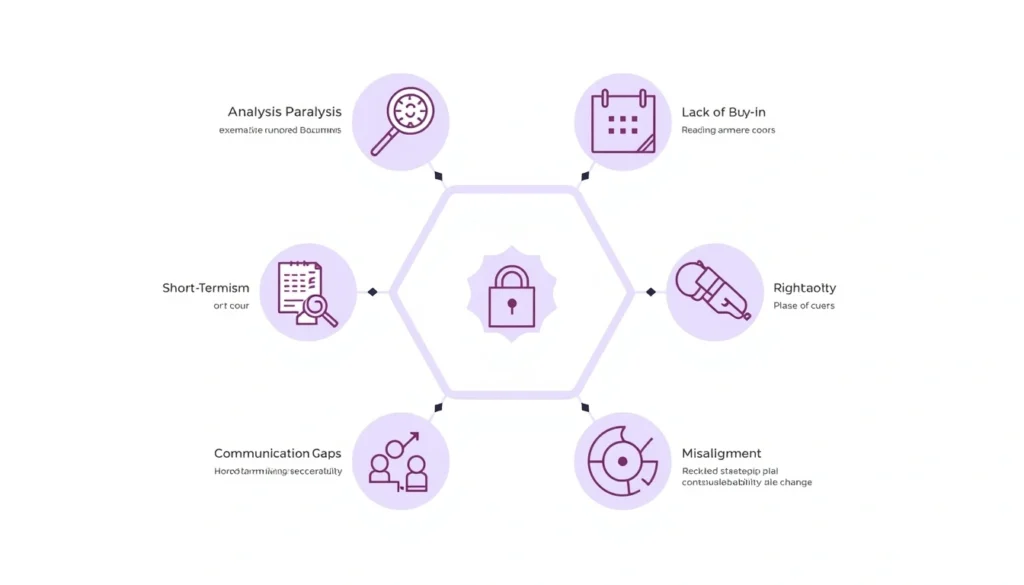
| Failure Point | The Problem | The Strategic Fix |
| Analysis Paralysis | Spending too much time perfecting the plan while the market shifts. | 40/60 Rule: Spend 40% on planning, 60% on execution. Prioritize speed over perfection. |
| Lack of Buy-In | Strategies created in a “leadership vacuum” without frontline input. | Inclusive Planning: Involve operations, sales, and product teams to ensure the plan is realistic. |
| Short-termism | Sacrificing long-term innovation (R&D) to meet immediate quarterly targets. | Balanced Metrics: Protect long-term investments while managing short-term health. |
| Communication Gaps | Employees don’t understand how their daily tasks relate to the big vision. | Cascading Goals: Create a direct line from individual objectives to the company’s high-level strategy. |
| Rigidity | Treating the plan as a fixed contract rather than a living document. | Quarterly Pivots: Review data regularly and adapt the strategy to evolving market trends. |
| Misalignment | Departments pursuing conflicting goals (e.g., Premium vs. High-Volume). | Unified Platforms: Use shared systems so every department sees the same priorities and progress. |
Avoiding “S.P.O.T.S.” and the Role of the OSM
One of the biggest problems in strategic management is what some call S.P.O.T.S., Strategic Plans On The Shelf. Companies spend thousands creating these plans, then nobody uses them. Why? Usually, because the people who need to execute them weren’t involved enough, or there’s no clear ownership.
To avoid this, smart organizations set up an Office of Strategy Management (OSM). This is a dedicated team that watches over how initiatives get developed and carried out. They make sure useful practices get shared across the company and keep the strategy alive—treating it as an ongoing conversation, not something you do once and forget about.
How Taskfino Bridges Strategy and Daily Work
A work management platform transforms abstract plans into measurable action by centralizing operations and connecting different business functions. When HR, accounting, tasks, and customer management live in one place, execution becomes clearer and more efficient.
Taskfino is an all-in-one office management system that centralizes essential business functions.
Taskfino turns plans into action by bringing everything into one place. Instead of just monitoring expenses after the fact, you can track revenue and profit as they happen. That means when you sit down for quarterly reviews, you’re working with current information and can adjust quickly if something’s off.
The HRMS features help make sure your people are working on what actually moves the needle. It keeps your best performers focused on high-priority work instead of getting stuck with routine tasks that anyone could handle.
The Financial Dashboard shows income, expenses, and profitability. Essential metrics for strategic reviews.
For customer management, Taskfino’s CRM tracks leads with follow-ups and real-time reporting. It connects to Accounting through a Project Approval System, where converted leads flow to finance for approval. Milestone-based payment collection tracks project payments.
The real advantage is integration.
When HR data, customer information, financial records, and task management exist in one platform, strategic decisions become faster. Leaders access the needed data without hunting through different systems.
Your Strategic Plan Blueprint
To turn theory into action, your strategic plan needs these core pieces:
- Executive Summary gives a quick overview of what you’re aiming for and how you’ll get there.
- Mission & Vision explain why your organization exists and where you want it to go.
- Environmental Analysis shows what you learned from your SWOT and PESTLE assessments in detail.
- SMART Goals cover both your long-term targets (3 to 5 years out) and what you need to hit within the next year.
- Action Plan breaks down who does what, when things need to happen, and what resources you’ll need.
Risk Management looks at what could go wrong and how you’ll handle it if it does.
Our 30-Day Strategic Management Checklist
-
Week 1: Identify your one true “Competitive Advantage” using VRIO.
-
Week 2: Meet with your team to align their daily tasks with your Q1 goals.
-
Week 3: Set up a dashboard in Taskfino to track your leading indicators.
-
Week 4: Schedule your first Quarterly Business Review (QBR).
Your Next Steps: From Reading to Action
Strategic management isn’t a luxury for Fortune 500 companies; it’s a survival skill for businesses of all sizes. The strategic tips outlined in this guide provide a roadmap for moving from high-level planning to disciplined, daily execution.
Start today with three simple actions.
First, pick one tip from the seven above and implement it this month. Don’t try doing all seven at once. Focus creates momentum.
Second, establish a quarterly review rhythm with your leadership team. Even one 2-hour quarterly review moves the needle dramatically.
Third, make the strategy visible by connecting it to daily work. Use goals, dashboards, or even a simple one-page strategy map. The objective is that every team member understands how their work contributes to company success.
A great strategy is worthless without disciplined execution. By implementing these strategic management tips and using unified tools like Taskfino, you transform strategic management from a yearly chore into a daily competitive advantage.
The market rewards speed, clarity, and discipline.
Companies that execute well don’t just survive; they dominate. Your competitors are either implementing these practices right now or they’re falling behind. Which side will you choose?
Move fast. Execute well. Win your market.
Commonly Asked Questions
The Content: How often should you update a strategic plan?
You should review your strategic plan every quarter. While the broad vision stays the same for years, market conditions change quickly. A quarterly review allows you to pivot your tactics without losing sight of your long term goals.
Why do most strategic plans fail?
Most strategic plans fail because of a gap between planning and execution. This usually happens when the team doesn’t understand the goals or when leadership treats the plan as a static document rather than a living process that requires daily attention.