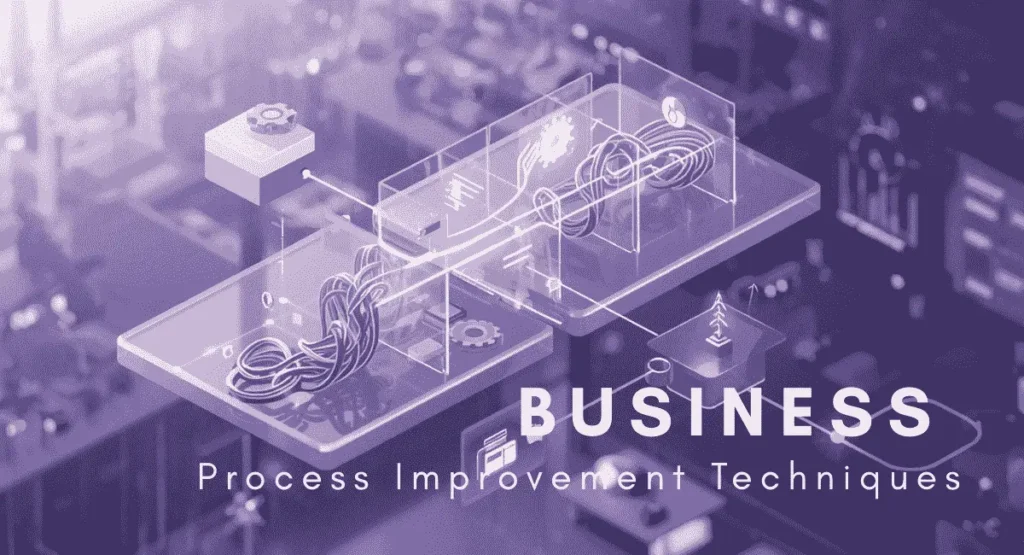
Your workflows need constant refinement to stay competitive. Business Process Improvement helps you streamline operations, cut costs dramatically, and scale without adding chaos to your team.
Introduction
Fast-paced markets punish inefficiency. Companies that scale without improving their processes end up with higher costs, frustrated teams, and missed opportunities.
The best-performing businesses use Business Process Improvement to optimize how work gets done.
Studies show average efficiency gains of 20% to 50% through methods like Lean and Six Sigma. This article walks you through 10 proven techniques, practical roadmaps, and the essential digital workplace infrastructure that make BPI work in real offices.
You’ll find frameworks drawn from successful companies and expert insights that deliver measurable results.
The techniques we cover help you eliminate waste, reduce errors, and build processes that actually scale with your growth.
What is Business Process Improvement (BPI)?
Business Process Improvement systematically analyzes and redesigns how work flows through your organization.
You’re not just fixing problems as they pop up. Instead, you’re using data-driven frameworks and a comprehensive operational platform to eliminate inefficiencies and deliver better value.
BPI employs proven methods like Lean for cutting waste or Six Sigma for minimizing defects. These frameworks target complete processes from start to finish rather than isolated tasks.
The results are quantifiable and sustainable.
Core principles include continuous evaluation, employee involvement, and smart technology integration. Think about manual invoicing that takes days to complete. BPI transforms this into an automated system that processes invoices in hours.
The entire workflow gets faster and more reliable.
BPI evolves with technology. AI-driven analytics now enable predictive optimizations that adapt to your changing business needs. You can spot potential bottlenecks before they slow you down.

Comparing the Top Process Improvement Methodologies
Different methodologies focus on different problems. Choosing the right approach determines whether your improvements actually stick.
This comparison shows you the most effective frameworks and where they work best.
| Methodology | Focus | Key Tools/Steps | Best For | Pros | Cons |
| Lean | Waste reduction | Value stream mapping, 5S | Manufacturing/services | Quick implementation, cost savings | Requires cultural shift |
| Six Sigma | Defect minimization | DMAIC (Define-Measure-Analyze-Improve-Control) | Quality control | Statistical rigor, high ROI | Intensive training needed |
| Kaizen | Continuous small changes | PDCA cycles, daily huddles | All industries | Builds long-term habits | Slower for radical changes |
| BPR | Radical redesign | Clean-slate analysis | Legacy systems | Transformative gains | Risk of disruption |
| TOC | Bottleneck resolution | Five focusing steps | Production scaling | Targets root issues | Complex identification |
| TQM | Holistic quality | Employee feedback loops | Customer operations | Comprehensive coverage | Resource-intensive |
| Agile | Iterative delivery | Sprints, retrospectives | Dynamic workflows | High flexibility | Less suited for rigid processes |
| PDCA | Iterative testing | Cycle repetition | Experimentation | Simple and adaptable | Needs discipline |
| 5S | Workplace organization | Sort, Set, Shine, Standardize, Sustain | Operations floors | Immediate productivity boost | Maintenance required |
| VSM | Flow visualization | Current/future state maps | Supply chains | Reveals hidden waste | Time-consuming upfront |
These 10 process improvement techniques form the backbone of modern BPI:
- Lean and Six Sigma dominate because they deliver proven, scalable results
- Service companies typically benefit from Lean for streamlining workflows
- Manufacturing operations see stronger returns with Six Sigma’s defect reduction
- Kaizen works beautifully for teams ready to make steady, incremental progress
- BPR suits organizations willing to completely rethink outdated systems
- TOC helps you find and fix the one constraint holding everything else back
Each process improvement methodology brings unique strengths based on your specific needs and industry context.
Expert Insights: Why “Perfect” Processes Fail in the Real World
Even brilliantly designed processes collapse without proper execution support. The disconnect between planning and reality kills most improvement initiatives.
Real-World Experience and Common Pitfalls
Change management failures doom most BPI efforts. Roughly 70% of Business Process Reengineering initiatives fail because employees resist the changes.
One retail chain watched its entire Lean rollout collapse when staff quietly returned to old habits. The company had skipped adequate training and support.
Process decay represents another common trap. You implement improvements and see immediate gains. Then over months, those gains slowly erode as teams drift back to familiar patterns.
Without ongoing monitoring, your hard-won efficiency disappears.
Toyota’s Kaizen success offers a powerful contrast. The company sustains improvements through daily employee involvement rather than top-down mandates.
Everyone participates in identifying small refinements. This creates lasting change instead of temporary wins.
Six Sigma adoptions fail in cultures that resist data-driven decision making.
A manufacturing firm spent months training teams on statistical analysis only to see managers ignore the findings. The methodology was sound, but the culture wasn’t ready.
Expert recommendations for avoiding these pitfalls:
- Pilot changes in one department first before company-wide rollout
- Gather employee feedback through regular surveys
- Tie performance incentives directly to process improvement KPIs
- Build in monitoring systems from day one
- Invest in change management training for leaders
Real business improvement techniques only work when your people embrace them. Perfect processes on paper mean nothing if your team can’t or won’t follow them.
A 6-Step Roadmap to Implementing BPI with Software
This roadmap integrates technology at every phase to accelerate your improvements. Modern software tools make BPI faster and more accurate than manual approaches.
Step 1: Identify Objectives
Start by defining SMART goals connected to your business KPIs, as this form of high-level organizational planning ensures your improvements align with the company’s broader trajectory
You need specific targets like reducing cycle time by a third or cutting error rates significantly. Vague goals like “improve efficiency” won’t drive focused action.
Engage cross-functional teams and leadership early.
Ask which processes create the biggest bottlenecks or customer complaints. Customer onboarding, order fulfillment, and invoice processing typically offer high ROI potential.
Pro Tip: OKR software like Weekdone helps ensure your process improvement strategies align across departments.
When everyone tracks the same objectives, improvements compound instead of conflicting.
Step 2: Map the “As-Is” Process
Visualize your current workflows before you can improve them. BPMN diagramming tools like Lucidchart or Microsoft Visio let you create detailed process maps.
These visual representations spotlight where work gets stuck or duplicated.
Value stream mapping uncovers steps that don’t add value. You might discover three approval layers when one would suffice. Maybe customer data gets entered manually into four different systems.
The “as-is” map gives you a baseline for measuring improvement.
Some teams use simpler tools when getting started. TaskFino users often mention mapping out basic workflows in the platform’s Kanban views before diving into formal BPMN diagrams.
The key is capturing how work actually flows, not how you think it should flow.
Step 3: Perform Root Cause Analysis
Surface symptoms rarely reveal underlying problems. Root cause analysis techniques dig deeper to find what’s really breaking your process.
The 5 Whys method works well for straightforward issues. You keep asking “why” until you hit the fundamental cause.
Ishikawa diagrams (also called Fishbone diagrams) help with complex problems involving multiple factors.
These visual tools organize potential causes into categories like people, processes, technology, and environment.
Process mining software like Celonis analyzes system logs for data-backed insights. You’ll spot patterns humans miss, like supply delays consistently traced back to vendor communication gaps.
This beats guessing based on anecdotes.
Step 4: Design the “To-Be” State
Craft your optimized workflow incorporating automation opportunities and methodology best practices. If you’re using Six Sigma, validate your design through DMAIC principles. Lean practitioners focus on eliminating the waste identified in step two.
No-code platforms like ProcessMaker let you simulate new designs before implementation. Test different scenarios to ensure your improved process scales as your business grows. Catch problems in simulation rather than production.
Your “to-be” state should be significantly better than your current state, not just marginally improved. Look for opportunities to eliminate entire steps, not just make existing steps slightly faster.
Step 5: Implement and Automate
Launch through phased rollouts rather than big-bang changes.
Start with one team or department as a pilot group. RPA tools like UiPath automate repetitive tasks that drain employee time. Workflow automation platforms like Zapier connect your systems so data flows automatically.
Current benchmarks show well-designed implementations achieve significant task automation rates. You’re removing the manual work that creates errors and slows everything down.
Employees shift focus to judgment-based work that adds real value.
Important: Iron out issues during pilots before scaling company-wide. Early adopters provide crucial feedback that shapes your final rollout. Their buy-in also helps convince skeptics across the organization.
Step 6: Monitor and Adjust
Deploy dashboards in Tableau or Power BI for real-time KPI tracking.
You need visibility into whether your improvements deliver promised results. Set up alerts for when metrics drift outside acceptable ranges.
Feed monitoring data into PDCA cycles for continuous refinement. Regular audits catch process decay before it erodes your gains. Employee feedback loops reveal friction points that data alone might miss.
Remember: BPI is never truly “done.” Markets change, technology evolves, and customer expectations shift. Your monitoring system should surface opportunities for the next round of improvements.
Advanced Tips: Sustaining a “Culture of Excellence”
One-time process improvements fade without cultural support. Organizations that sustain gains embed continuous improvement into daily operations.
Kaizen events bring teams together regularly to identify and solve problems. These aren’t formal project meetings but quick collaborative sessions focused on specific issues.
Leadership training ensures managers know how to spot improvement opportunities and support employee initiatives.
Key tactics for building a lasting improvement culture:
- Recognition programs that celebrate teams that successfully improve their processes
- Share wins across the organization to build momentum
- Metrics-driven audits that keep everyone honest about whether improvements stick
- Gamified dashboards that make progress visible and rewarding
- Cross-team workshops that foster ownership beyond individual departments
When marketing understands operations challenges and vice versa, people think about end-to-end processes instead of just their piece.
This cultural shift transforms process improvement from a project into a mindset. Employees habitually ask “how can we do this better?” rather than accepting inefficiency as unchangeable.
The Modern BPI Toolkit
Your process improvement tools determine how quickly you can analyze, design, and implement changes. Modern options blend AI capabilities, no-code interfaces, and powerful analytics.
Essential paid tools for serious BPI work:
- Celonis for process mining that reveals hidden inefficiencies in your system logs
- UiPath for robotic process automation that handles repetitive tasks
- Airtable for flexible process mapping and tracking without coding
- ProcessGPT for AI-powered predictive insights about future bottlenecks
Free alternatives for teams getting started:
- Draw.io for creating process diagrams and flowcharts
- Google Sheets for tracking metrics and improvement projects
- Zapier basics for simple workflow automation between apps
Integration matters as much as individual tools. Your toolkit should connect seamlessly so data flows between process mapping, automation, and analytics. This eliminates manual data transfer that creates new inefficiencies while fixing old ones.
AI platforms increasingly predict where processes will break before they actually fail. You shift from reactive fixes to proactive optimization.
This technology makes sophisticated BPI accessible to mid-sized companies that couldn’t previously afford extensive process engineering teams.
Your business can’t afford inefficient processes in competitive markets.
The 10 business process improvement techniques covered here give you proven frameworks for sustainable gains. Start with mapping your most painful process, then apply the methodology that fits your culture and industry.
BPI delivers measurable results when you combine the right process improvement methodology with modern tools and strong change management.
Your competitors are already optimizing their workflows. The question isn’t whether to implement BPI but how quickly you can start seeing returns.
Your BPI Questions, Answered
What are the most common business process improvement techniques?
The most common techniques include Lean for waste reduction, Six Sigma for defect minimization, Kaizen for continuous improvement, and PDCA for iterative testing.
What is the difference between Lean and Six Sigma?
Lean focuses on eliminating waste and speeding up workflows, while Six Sigma emphasizes reducing defects and variation through statistical analysis.
How do I identify bottlenecks in my current business processes?
Use value stream mapping to visualize workflows, then apply process mining software like Celonis to analyze system logs and reveal where work consistently gets stuck.
What are the 5 steps of the DMAIC process?
DMAIC stands for Define the problem, Measure current performance, Analyze root causes, Improve the process, and Control to sustain gains.
How can workplace management software help with process improvement?
Workplace management software automates repetitive tasks, provides real-time analytics dashboards, and integrates systems to eliminate manual data transfer that creates inefficiencies.
What is the “5 Whys” technique in root cause analysis?
The 5 Whys technique involves repeatedly asking “why” a problem occurs until you uncover the fundamental cause rather than just addressing surface symptoms.
Why is Kaizen important for small business growth?
Kaizen builds a culture of continuous small improvements that compound over time, allowing small businesses to scale efficiently without major disruptions or expensive consultants.